A Living Room That Looks as Good as It Feels
Some rooms in a home just land. You walk in and everything feels considered — the proportions are right, the materials are beautiful, and there’s a sense that nothing in the room is accidental. The living room is the hardest space to get there. It’s the most-used room in the house, it has to do a lot of different things, and it tends to organize itself around a screen that can feel like an afterthought in the overall design.
Unless, of course, the TV is part of the design from the beginning.
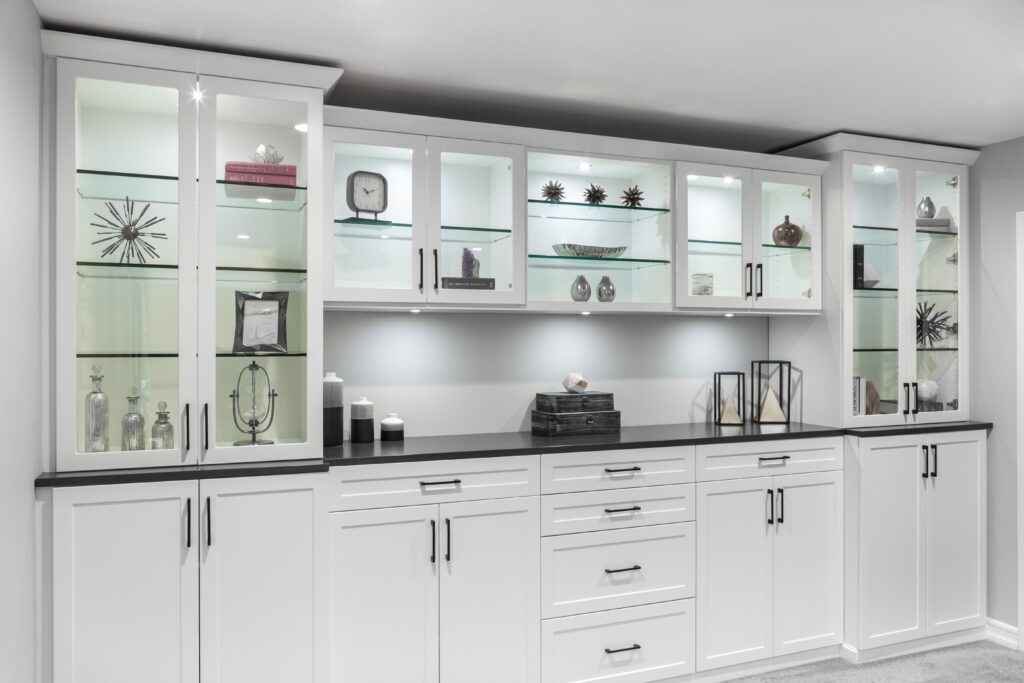
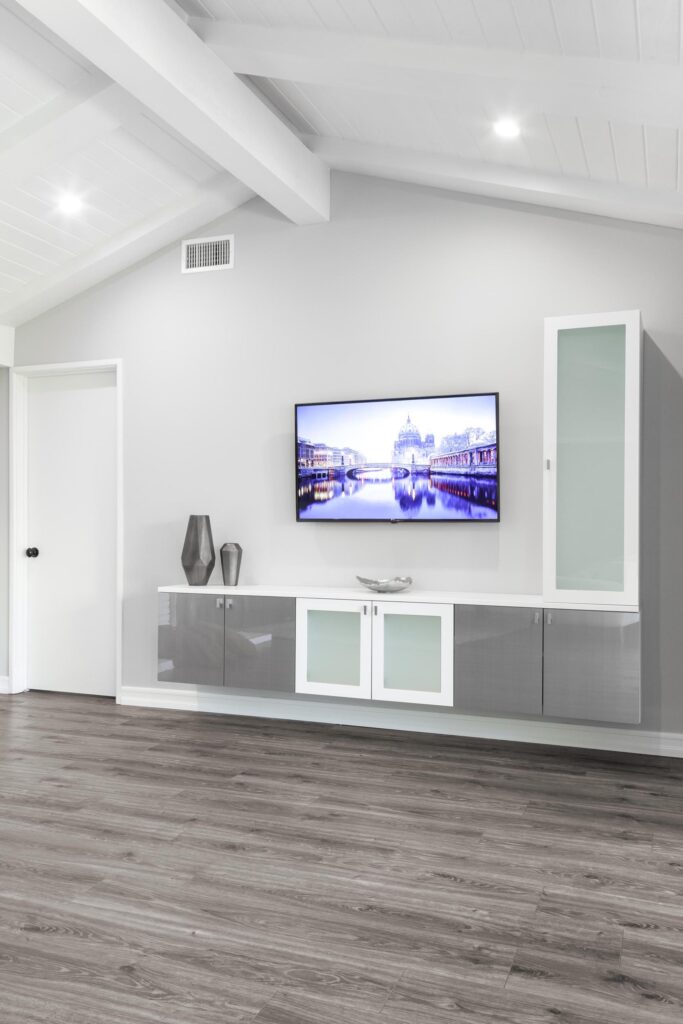
A custom built-in entertainment center is one of the most visually commanding upgrades you can make to a home. When it’s done well — floor-to-ceiling cabinetry, integrated lighting, beautiful materials that feel native to the house — it stops being a media setup and becomes the architectural centerpiece the room was always meant to have. At Mountain Closets & Design, we’ve been building them across the Aspen-to-Vail corridor since 2002, and we still love seeing the moment a client walks in after install and just… stops.
Here’s what goes into one, and what to think about when you’re ready to talk about yours.
Why a Built-In Changes the Room Entirely
The difference between a freestanding media console — even a beautiful, expensive one — and a custom built-in entertainment center is the difference between furniture and architecture. One sits in the room. The other becomes the room.
When cabinetry is built to your ceiling height, spans your wall width, and is designed around your specific fireplace placement, window sightlines, and beam details, it reads as a permanent, intentional feature of the home. The TV is no longer a screen on a stand — it’s framed, integrated, and elevated. Everything around it is designed to be exactly where it is. The proportions feel natural because they are natural — they were drawn to fit this room and no other.
In mountain homes especially, where the architecture already has so much presence — exposed beams, stone, natural light flooding in from big windows — a custom built-in entertainment unit that’s designed to complement those elements rather than compete with them is something genuinely remarkable. It feels like the house always had it.
Is a built-in entertainment center worth it? That’s one of the questions we hear most often, and the honest answer is: it depends what you’re comparing it to. Compared to a series of freestanding furniture pieces you’ll rearrange and eventually outgrow, a built-in is a different category of investment — one that adds meaningful value to the home, looks dramatically better, and lasts indefinitely. For most clients, the question stops feeling relevant once they see the design rendered in 3D and begin to picture their room that way. At that point it shifts from is this worth it to when can we start.
What’s Actually Inside a Custom Entertainment Wall
From the outside, a well-designed entertainment wall looks effortless. Getting there takes a lot of careful decisions. Here’s what we’re thinking about when we design one.
The TV bay and surround. The anchor of the whole wall. The position, height, and framing of the screen are designed around your room geometry, your seating arrangement, and your sightlines — not a standard spec. A TV bay that’s properly sized and centered, with cabinetry that frames it rather than crowds it, looks entirely different from a screen that’s simply mounted. When there’s a fireplace on the same wall — which is extremely common in Colorado living rooms — the way the two elements are balanced and unified in a single architectural surround is one of the most beautiful things we build.
Component and media storage. Everything that powers the system — cable boxes, streaming devices, gaming consoles, receivers, routers — needs a home that keeps it accessible, ventilated, and out of sight. Dedicated component cabinetry is designed for exactly this: precise dimensions, planned ventilation, and clean access, all completely invisible from across the room. No visible equipment, no cable chaos, nothing that competes with the overall design.
Display shelving. Open shelving on an entertainment wall is where the space becomes personal. Art objects, books, plants, things you’ve collected that actually mean something to you — when shelves are built at the right depth and proportion, everything on them looks like it was curated, not collected. The objects you love deserve a backdrop that does them justice.
Closed cabinetry. Upper and lower cabinetry keeps the room feeling clean and expansive. Everything you want close but out of view — extra pillows, board games, bar accessories, the kids’ stuff — gets a proper home without taking up floor space or visual weight. Floor-to-ceiling cabinetry in particular transforms the vertical scale of a room in a way that’s hard to appreciate until you’re standing in it.
Integrated lighting. This is where good becomes extraordinary. In-cabinet lighting, backlit niches behind the screen, under-shelf lighting along display runs — when the lights come down in the evening and the built-in is glowing, the room has an atmosphere that no lamp placement ever achieves. It’s one of those design details that clients mention years later.
Power and cable integration. Every outlet, every cable run, every HDMI path — all planned during the design phase so that when the project is finished, there are no visible wires. Not managed. Not hidden behind a cover. Just gone, because the infrastructure was designed in from the beginning.
Built-Ins and Mountain Home Architecture
This is worth its own conversation, because it’s genuinely different here than it is in other parts of the country.
Homes across the Aspen-to-Vail corridor tend to have architecture with real presence. Vaulted ceilings. Exposed timber framing. Stone fireplaces that run floor to ceiling. Wide-plank wood floors. Big windows built to capture the landscape. These aren’t backdrop details — they’re the defining character of the home, and any cabinetry that doesn’t honor them will always feel like it doesn’t quite fit.
The most successful entertainment walls we build in this region are the ones that feel like they came from the same design vocabulary as everything else in the room. A home with heavy timbers and natural stone calls for something with warmth and weight — rich stained hardwood, maybe a thicker profile on the shelving, hardware with some substance to it. A newer, more contemporary mountain build might want something cleaner: flat-front cabinetry, integrated pulls, a finish that’s sophisticated without being rustic. A transitional home that mixes both aesthetics is often where the most interesting design decisions get made.
We also design for the fireplace wall constantly. In Colorado living rooms, it’s extremely common to have both a fireplace and a television on the same wall, and how those two elements relate to each other matters enormously. A unified surround that frames both — where the fireplace and screen are integrated into a single architectural composition rather than sitting awkwardly side by side — is one of the most beautiful things a built-in can do. Done right, it looks like the architect planned it that way from day one.
Ceiling height is another factor that mountain homes handle differently. A lot of homes in this area have dramatic vertical space, and a custom built-in TV cabinet that only runs eight feet up in a room with twelve-foot ceilings is a missed opportunity. Carrying the cabinetry to the ceiling — or designing an intentional relationship between the top of the unit and the ceiling line — uses that volume in a way that feels resolved rather than unfinished.
Materials and Finishes: The Part Everyone Loves
This is where your entertainment wall stops being a design and starts being yours. Material and finish selections are some of the most enjoyable conversations in the process, and in a mountain home, the options are especially rich.
Painted cabinetry at its best is quietly stunning. A warm white or sophisticated off-white entertainment wall catches light beautifully, feels timeless rather than trendy, and works elegantly with the natural textures and materials common in Colorado homes — stone, wood, linen, leather. The right paint finish has a depth to it that cheap painted surfaces never achieve.
Stained hardwood is something else entirely. A walnut entertainment wall has a presence that’s almost visceral — the grain, the warmth, the way it shifts in the afternoon light. White oak is having a well-deserved moment right now, and in a Roaring Fork Valley home with wood floors and exposed ceiling timbers, a white oak built-in TV cabinet feels like it arrived from the same source as the rest of the house. It just belongs.
Two-tone designs have become genuinely exciting, and done with the right proportions, they’re among the most sophisticated things we produce. Deep charcoal or forest green lower cabinetry grounded with lighter upper shelving. A warm wood floating shelf through the center of an otherwise painted wall, breaking up the surface with something organic. Dark painted doors with natural wood interiors that reveal themselves when opened. These combinations take confidence to pull off, and when they work, they’re unforgettable.
Door styles shape the whole personality of the wall. Shaker profile brings warmth and versatility that ages beautifully. Flat-front frameless cabinetry reads as clean and architectural, right at home in a modern mountain aesthetic. Glass-front uppers give display shelves a layer of refinement — the objects are visible but the whole thing feels more finished, more intentional.
Hardware is the fine detail that educated eyes notice immediately. Matte black pulls on a warm white painted wall. Brushed brass on walnut. Long, slender bar pulls on flat-front cabinetry. These aren’t afterthoughts — they’re the final edit on a design that was already working, and the right choice elevates everything around it.
The Design Conversation
Every entertainment center we build starts with a real conversation about your room and how you live in it — not a questionnaire, not a spec sheet. Here’s the kind of thing we’re thinking through together.
The wall itself. Dimensions, what’s on it (fireplace? windows? doorways?), ceiling height, architectural details. These aren’t constraints — they’re the design brief. A living room wall in an Aspen or Vail home often has a lot going on, and the best entertainment walls are the ones that work with the architecture rather than alongside it.
The screen situation. Your current TV, whether an upgrade is coming, and how the room is used — movies, sports, music, all of the above. We design the TV bay for the screen you want to have, not just the one you have today.
How the room lives. Is this a quiet adult space or does it see a lot of family activity? Do you entertain regularly? Is there a bar nearby that the built-in might connect to? Is the fireplace the true center of the room and the TV a secondary element — or the reverse? These shape every proportion and storage decision we make.
The aesthetic. Rustic and warm with natural wood and stone detail? Clean and modern with flat fronts and minimal hardware? Something with a more collected, layered feel? We design to the house, not to a template. A custom built-in entertainment unit in a contemporary Basalt home should look completely different from one in a traditional Aspen chalet — and both should feel like they’ve always been there.
Questions We Hear a Lot
If you’ve been researching this for a while, some of these will sound familiar.
How long does it take to build and install a custom entertainment center? Every project is different, but from the time a design is finalized and approved, most built-in entertainment walls are installed within a few weeks. The in-home consultation and design phase — which includes your 3D rendering and any revisions — typically takes a couple of weeks on its own. We’d rather take the time to get it exactly right than rush a design you’ll be looking at for decades.
Can you build around an existing fireplace? Yes, and we do it all the time. Some of the most striking walls we’ve built are centered on a fireplace that already existed. The key is designing the cabinetry so the fireplace reads as part of a unified composition rather than a thing the cabinetry was forced to work around. Proportions, symmetry, and the way the materials relate to the fireplace surround all matter here — and this is exactly the kind of decision that’s much easier with a closet design specialist who can show you the options in 3D before anything is built.
What’s the best way to hide TV wires with a built-in? This is one of the most common things people search for, and the honest answer is: the cleanest solution is to plan the wire management into the design from the beginning, which is exactly what we do. In-wall cable routing, dedicated component bays with planned ventilation and access, and pre-installed conduit for future upgrades — all of it gets built into the structure so wires aren’t something you manage after the fact. They simply don’t exist as a visible element.
Can I add a built-in entertainment center to a room that isn’t being remodeled? Absolutely. A built-in doesn’t require a full renovation — it’s installed against your existing wall and finished to look like it was always there. We work in finished, lived-in homes all the time. The install process is clean and efficient, and the result is a room that looks completely transformed.
How is a custom built-in different from something I’d buy at a furniture store? Built-to-your-room dimensions, materials selected to match your home’s specific aesthetic, integrated electrical and cable planning, and craftsmanship that’s meant to last the life of the house. A furniture store piece is built to fit an average room. A custom built-in is built to fit your room — and it shows in every proportion.
What to Expect From the Process
For homeowners across Aspen, Vail, Basalt, Carbondale, Glenwood Springs, and the broader Roaring Fork Valley, the process is designed to be genuinely enjoyable.
It begins with a free in-home consultation — one of our designers comes to the space, takes measurements, and spends real time understanding the room and what you want from it. This isn’t a sales call. It’s a design conversation, and clients regularly tell us it’s where they start to get actually excited about the project.
From that consultation, we build a full 3D rendering of your custom built-in entertainment center — your room, your proportions, your specific material and finish selections. Not a generic mockup. You’ll see exactly what it’s going to look like before a single piece is built. That’s where fine-tuning happens: adjust the shelf heights, try a different finish on the lower cabinetry, see how the integrated lighting shifts the feel of the whole wall. We go back and forth until it’s exactly right.
Once the design is approved, we handle fabrication and installation — the same team throughout, no handoffs, no miscommunication. And every project we build is backed by our lifetime guarantee, because craftsmanship that’s meant to last should be warranted to last.
The Room That Pulls Everything Together
A living room that’s been designed with intention — where the main wall is an architectural statement rather than an arrangement of furniture — has a quality that’s immediately felt but hard to articulate. It’s the sense that everything is where it belongs, that the room was made for this house and this life, that the people who live here care about how things look and feel.
A custom built-in entertainment center is one of the most direct paths to that feeling. It’s not a renovation. It’s not a remodel. It’s a single, beautifully executed element that changes how the entire room reads — and it lasts as long as the house does.
If you’re starting to think about what that could look like in your living room, we’d love to have that conversation.
Call or text Mountain Closets & Design at (970) 779-5472, or visit us at 0062 County Road 113, Building C, Unit 1, Carbondale, CO. Free in-home consultations throughout the Aspen-to-Vail corridor.
Mountain Closets & Design has served the Roaring Fork, Vail Valley and surrounding communities since 2002 — custom closets, home offices, mudrooms, entertainment centers, and whole-home storage solutions, all backed by a lifetime guarantee.
Mountain Closets & Design
The Best Custom Walk-In Closets, Closet Organization Systems & More in Aspen, Glenwood Springs, Vail & Beyond

With a focus on understanding our clients’ needs and maximizing space efficiently, Mountain Closets is known for thoughtful design and commitment to enhancing the functionality and aesthetics of mountain homes.
We specialize in creating personalized organization and storage systems not just for closets, but also for pantries, garages, home offices, and more. Reach out today and get started! (Read about the difference when you work with us!)